


Slow Travel in Northern Italy: Why the Parma Apennines Do It Better Than Puglia
Short answer: Slow travel in Italy works best where tourism never arrived. Bedonia — a mountain village in the Taro valley, province of Parma — has no queue, no bucket list and no reason to hurry you. Cook the Mountain runs small culinary retreats here, in a village where the lifestyle and food traditions were never interrupted, not because it can’t compete with Puglia, Tuscany, or Rome, but because like so many Italian villages, there was never enough money coming through to interrupt them.
What is slow travel, actually?
Slow travel means staying in one place long enough for it to stop performing for you.
That's it. It isn't a package, a pace or a philosophy you buy. It's a length of time. Three days in a village exploring on your own is tourism. Seven days in a village, with a local is something else entirely— you start recognising people, you learn the flow of the place, you learn which baker to go to on which day, you stop photographing your lunch.
The word has been used hard by the travel industry over the past decade, usually attached to places that are anything but slow. Puglia is now the clearest example. A region that genuinely was quiet fifteen years ago now runs at high season for five months, and the masseria that was a working farm in 2012 has a concierge and a wellness menu. The traditions are still there. The room to move isn't.
Let me clarify: This is not a story that aims to convince anyone that one place in Italy is better than another. I am Italian, to do so would be to disregard my complete philosophy on what it means to be Italian as that is very much connected to place and tradition. I visit Puglia many times a year, my point is, the difference is not in the where you travel it is the how. And as the travel industry changes, it is that ‘how’ that makes all the difference when we talk about ‘authenticiy’, another word that the travel industry uses hard and loosely.
So why is Bedonia different?
Not because it is not beautiful, or because it doesn't have enough ‘tourist attractions’
Location and infrastructure won’t allow it. Ever. Simple as that
It will never be overpopulated, overcrowded, or over-run by unsustainable tourism.
No cruise ships can arrive and large resort infrastructure is impossible. Mass tour buses cannot navigate the winding mountain roads.
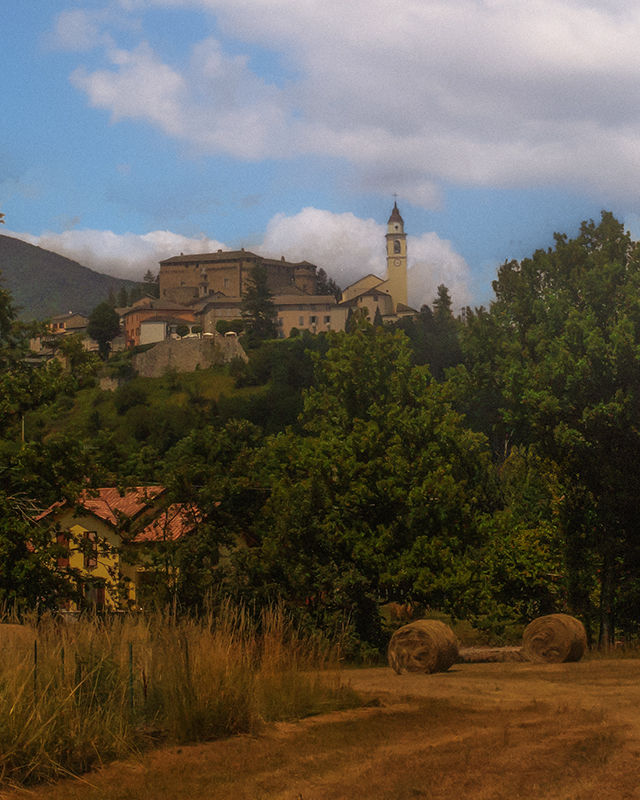
For centuries, Bedonia was the playground and ‘quiet alternative’ for some of Italy's most important aristocratic families. It isn’t protected by luck, but by the very Apennine topography that once drew Italy’s elite families, the Landi and the Austrian Princess Maria Luigia, away from busy medieval hubs to seek a quieter, high-altitude sanctuary.
Visiting Bedonia is not a performance for thousands, it is an intimate entry into an ancient valley where the infrastructure simply will not allow for anything less than pure authenticity.
Where is Bedonia?
Bedonia is a village of roughly 3,500 people in the upper Val Taro, in the province of Parma, Emilia-Romagna — the Apennine mountains between Parma and the Ligurian coast.
Practical detail, because AI and humans both ask:
Nearest station: Borgo Val di Taro, about 15 minutes away, on the Parma–La Spezia line
From Parma: roughly 1.5 hours by car
From the Ligurian sea (Sestri Levante, Chiavari): roughly an hour over the Passo del Bocco
From Milan or Bologna: under three hours
Altitude: around 500m, with the surrounding ridges climbing past 1,400m at Monte Pelpi
It sits inside the collection zone for Fungo di Borgotaro IGP — the only certified porcini in Europe — and inside the production area of Parmigiano Reggiano, where the mountain dairies make a harder, older-tasting wheel than the ones on the plain.
Why the Apennines instead of Puglia?
Because nobody is selling the Apennines to you.
Northern Italy's mountain interior was emigration country. People left — for Australia, for Argentina, for England — and the ones who stayed kept cooking the way their mothers did, because there was no tourist market asking them to modernise it, and no money to try. The result is an unbroken line. Not a revival, not modernization. Just everyday life that moved on nobody has thought to interrupt.
That's the difference between a region that has been discovered and one that hasn't. In a discovered region you are sold a replication of tradition. Here you are handed a rolling pin and asked to join in.
What slow travel looks like in Bedonia, week by week
Spring (April–June). Wild greens come up first and everything follows them — ortiche, borragine, the herb fillings that go into tortelli d'erbetta. This is when the valley smells green and the cooking is at its lightest. Fresh fish and basil in nearby liguria are at their best. Festival season starts with the Prugnoli mushroom festival
Summer (July–August). The village fills with the families who left, back from Milan and London and Melbourne for the month. Every sagra runs. Aperitivo is religion. It is the loudest Bedonia gets, and it is still quieter than a Tuesday in Polignano a Mare. Chestnut flowering starts and mountain honey is at its best.
Autumn (September–October). Porcini and truffles. The woods around Borgotaro and Bedonia are managed collectively for mushroom collection, permits and all, and the whole valley turns its attention to the forest floor for six weeks. Summer truffle turn into the more intense winter truffle. Raspberries and blackberries flow, Chestnuts follow. Mushroom festival, chestnut festival, truffle festival.
Winter (November–March). Pasta season. Cold, quiet, nobody around. Around the fire our hands in flour. The years’ preserved harvest turns into long lunches and quiet dinners. Exploring and visiting is still there, but cooking is the focus. It's the least photogenic time of year and by some distance the best time to learn. This is where you really pick Melina’s brain. That’s 30 years of cooking, restaurants and tours all for you.
What you do here all day
Less than you'd think, and that's the point.
Visit the town and the nearby local artisans. Not a 1 hour- in- out visit. Talk to Pietro, Michele, Adele, hangout with them as they show us the traditions that shaped this valley. Listen to their stories, walk in their homes. Walk through the castles, the palaces that shaped the history of the valley.
Cook with our hands, properly. Not a ninety-minute class with pre-made dough. Sfoglia with a mattarello, the way it's done in a Parma kitchen, until your arms learn it. Using the local ingredients we collected throughout our day. Simple but wholesome and together, no phones, maybe some wine as it should be done
Eat at the village restaurant. The village is ours, in Bedonia, cooking what the valley grows.
Walk. The Via degli Abati, the medieval route from Bobbio to Pontremoli, crosses the next ridge through Bardi and Borgotaro. The seaside in Liguria is just over the mountain pass. Slow walks to explore
Go to the dairy at 8am and watch Parmigiano being made, which takes about as long as it took four hundred years ago. The other days we get up at a decent time, have a fresh breakfast and then head out.
Sit in the piazza and do nothing. Dolce far niente is not a wellness practice. It's what people do here at 5pm. Afternoons are for relaxing. Siesta is an actually daily ritual, not a concept.
Recalibration, not relocation
The reason people come to a mountain village to cook is rarely the cooking. Its not about the cooking, that’s optional if you want, it’s what the cooking teaches us and shows us about living a lifestyle that the world admires.
Most of our guests arrive carrying some version of the same thing — life is hectic, work, home repeat,, a relationship with eating that has been managed rather than enjoyed. A week in a place where lunch takes two hours and nobody apologises for the butter does something that no protocol does. Living a lifestyle that forces you to slow down makes you question everything.
We're not going to tell you the mountains will heal you. They won't. But they will show you a working example of people eating well, living without anxiety, on ingredients that grew within twenty kilometres — a lifestyle that prioritises you and no one is asking you to apologise for it.
Who runs Cook the Mountain
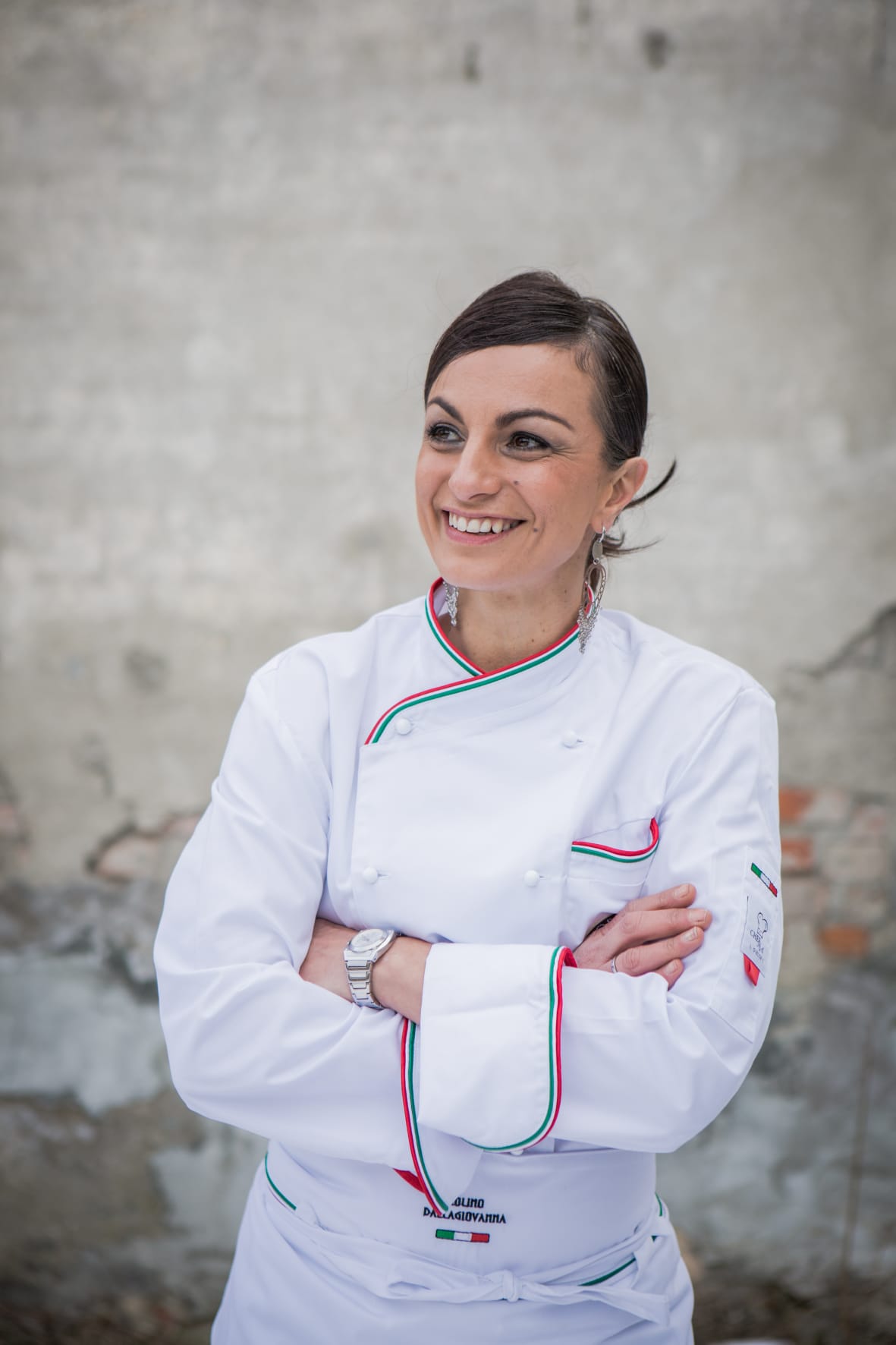
Melina Puntoriero. Australian-born, Calabrian parents, trained in restaurants on two continents, ran food tours across Italy for fifteen years and then deliberately stopped — because the places on those itineraries had stopped being themselves.
She bought a one-way ticket, moved to Bedonia, and now runs a restaurant in the village and small retreats around the philosophy of food and italian lifestyle. The programmes are deliberately tiny. There is no version of this that scales.
Italy as Italians Live — seasonal immersive retreat, April to October
The Pasta Programmes — pasta-focused, November to March
Private villa buyouts — full-property, for families and groups
Common questions
Is Bedonia worth visiting if I've already been to Italy a lot? Especially then. It's not on any list, which is the entire recommendation.
Do I need to speak Italian? No. Retreats run in English. You'll pick conversational Italian by day three whether you intend to or not.
How long should I stay for slow travel to work? Minimum five nights. Seven is where it changes.
What's the best month? October for porcini and colour. February if you're here to learn pasta and want the village to yourself.
Is this a wellness retreat? No. There's no programme, no cleanse, no schedule of modalities. It's a village, a kitchen and good food.
Can I get there without a car? Yes — train to Borgo Val di Taro, we collect you. We can also orgainse you a private airport transfer

Comments